How Inflation Is Driving Up Housing Costs?

And What It Means for Investors Inflation is no longer a distant economic concept — it is directly impacting the cost of living, and nowhere is this more visible than in housing.
Across global markets, rising inflation is driving both rental prices and construction costs higher, creating pressure on tenants while opening strategic opportunities for investors and developers.
The Direct Link Between Inflation and Housing Prices.
Inflation increases the cost of nearly everything involved in housing:
->Building materials (steel, insulation, transport) become more expensive
->Labor costs rise as wages adjust to inflation
->Financing costs increase due to higher interest rates
->As a result, traditional construction becomes slower, more expensive, and less predictable.
Developers are forced to pass these costs onto buyers and tenants, leading to higher property prices and rising rents.
Why Rents Continue to Increase?
When inflation rises, landlords and property owners face higher operational costs, including:
Maintenance and repairs
->Utilities and energy
->Property management expenses
->Loan repayments with higher interest rates
->To maintain profitability, these costs are transferred into rental pricing.
At the same time, housing shortages in many regions create strong demand, allowing rents to increase even further.
This creates a cycle: Higher costs
→ Higher rents
→ Reduced affordability
→ Increased demand for alternative housing solutions
The Supply Problem One of the biggest issues in today’s housing market is not just cost — it is speed of supply.
Traditional construction: Takes months or years.
Faces regulatory delays Is highly sensitive to price fluctuations
During inflationary periods, this delay becomes even more expensive, as costs continue to rise during the build phase.
This results in fewer completed projects and an even tighter housing market. What This Means for Investors and Developers Inflation creates two parallel realities:
1. Rising Risk in Traditional Construction
Unpredictable costs
Delayed timelines Lower margin certainty
2. Increased Opportunity in Fast Deployment Models
Faster time to market
Lower exposure to cost inflation
Immediate revenue generation
In a market where housing demand is increasing but supply is constrained, the ability to deploy units quickly becomes a major competitive advantage.
The Shift Toward Scalable Housing Solutions?
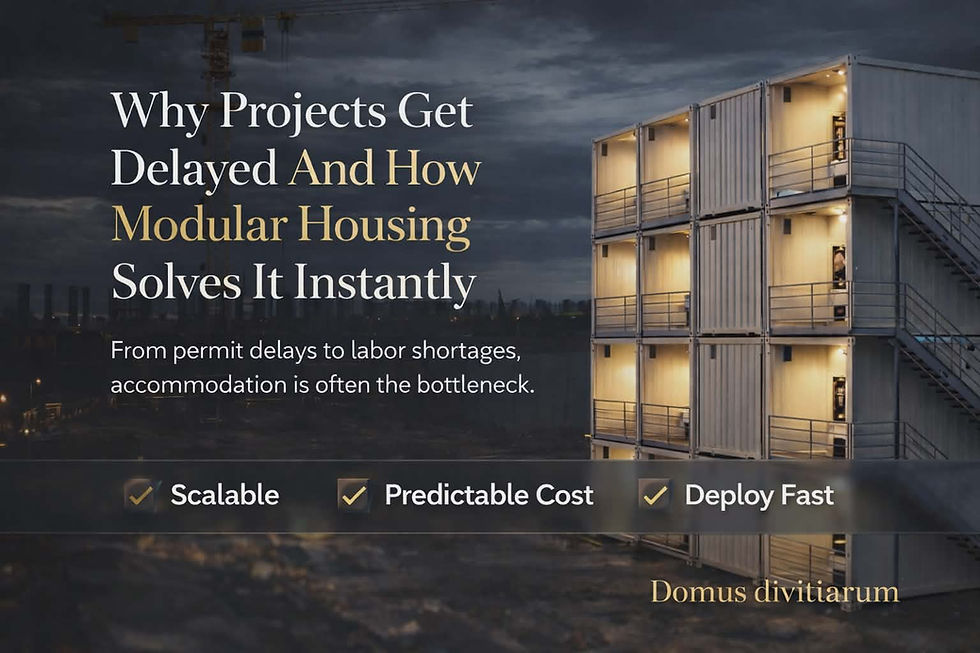
As inflation continues to impact construction and housing affordability, developers and investors are shifting toward modular and container-based housing systems.
These solutions offer: Predictable pricing structures
->Rapid deployment timelines
->Scalable expansion based on demand
-> Most importantly, they allow operators to generate income faster — reducing the impact of inflation on project profitability.
Conclusion Inflation is fundamentally reshaping the housing market.
Rising costs and slower construction are pushing rents higher, increasing pressure on tenants while creating new dynamics for investors.
In this environment, success depends on one key factor: The ability to deploy housing quickly, efficiently, and at scale.
Those who adapt to faster, more flexible housing models will not only protect themselves from inflation — but position themselves to benefit from it.


Comments